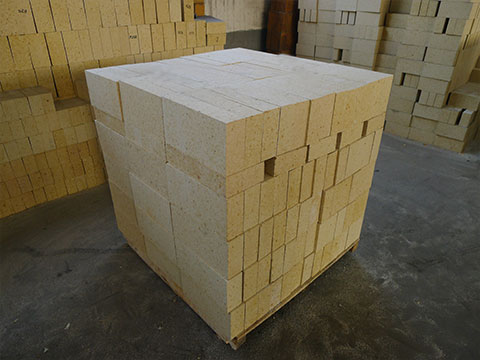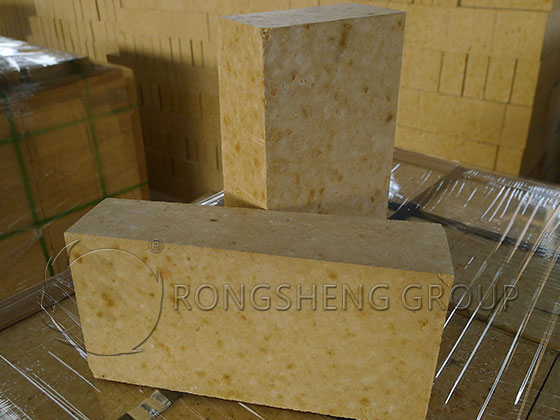
In kiln maintenance, the selection of refractory bricks directly affects the kiln’s lifespan and production safety. Choosing the right kiln bricks can save a significant amount on later maintenance costs. Choosing the wrong bricks may lead to cracking, peeling, and even production disruptions in a short period. RS Refractory Bricks Manufacturer has summarized years of production and sales experience to help companies purchase suitable kiln bricks and understand how to select refractory bricks for kiln maintenance.
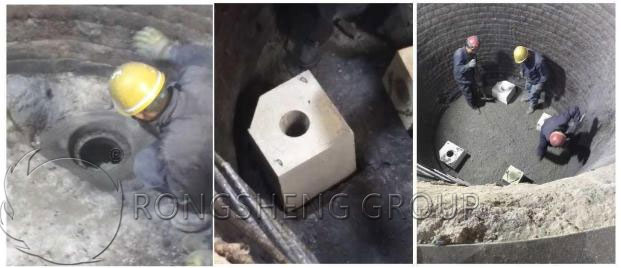
First, examine the kiln’s operating conditions to understand the working environment of the high-temperature furnace lining.
The core of selecting refractory bricks is ensuring they are suitable for the kiln’s operating conditions. These points must be clarified first:
– Temperature is a crucial factor: The highest temperature inside the kiln, the long-term operating temperature, and the temperature fluctuation range (e.g., the rate of heating and cooling) must all be clearly defined. For example, the long-term temperature of a ceramic kiln is around 1300℃, while a glass kiln may reach as high as 1600℃. Different temperatures correspond to different types of kiln bricks—clay bricks withstand approximately 1300℃, high-alumina bricks can reach 1600℃, mullite bricks are suitable for 1500~1700℃, and corundum bricks can withstand temperatures above 1800℃.
– Environmental “corrosiveness”: Is there any gas, liquid, or molten material corrosive inside the kiln? For example, steel plant kilns may come into contact with molten steel and slag, requiring highly corrosion-resistant magnesia or magnesia-alumina refractory bricks. For chemical kilns with acidic gases, silica refractory bricks would be more suitable. Mullite bricks are stable in neutral or slightly acidic environments and exhibit better resistance to chemical attack than ordinary clay bricks.
– Stress conditions: How much pressure does the brick need to withstand? Are there vibrations or impacts? For example, bricks at the bottom of the kiln need to be selected with high compressive strength (generally requiring above 30 MPa, while mullite bricks can reach 50-80 MPa). For the furnace walls, resistance to thermal shock (not cracking under sudden cooling) is more important, which is precisely where mullite bricks excel.
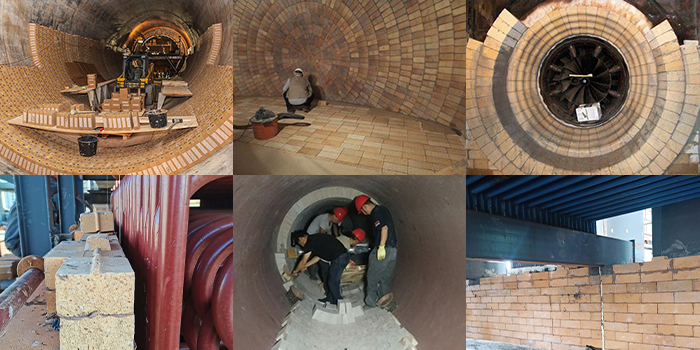
Understanding Refractory Brick Materials to Match Core Furnace Lining Requirements
Different refractory brick materials have vastly different performance indicators, requiring specific matching:
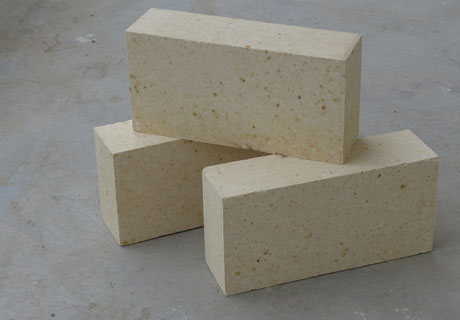
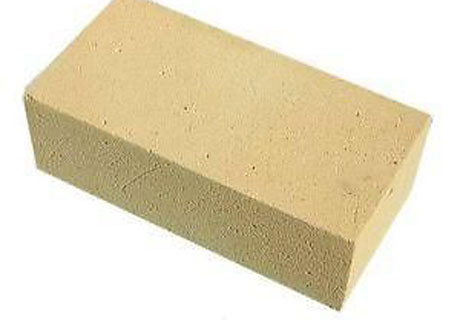
Clay Bricks
The king of cost-effectiveness, with moderate temperature resistance. Suitable for kilns with lower temperatures and less harsh environments (such as some small heating furnaces). The advantage is its low price; the disadvantages are moderate corrosion resistance and high-temperature strength, and significantly weaker thermal shock resistance compared to mullite bricks.
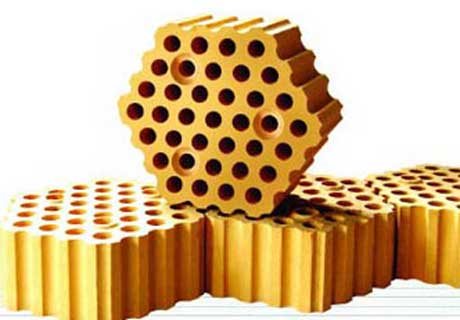
High-Alumina Bricks
An “all-rounder,” the higher the aluminum content (e.g., Al₂O₃ 65% or more), the better the temperature resistance, strength, and corrosion resistance. Suitable for most industrial kilns (metallurgy, ceramics, petrochemicals, etc.). Most commonly used in maintenance, balancing performance and cost. Compared to mullite bricks, its volumetric stability at high temperatures is slightly inferior.
Mulite Bricks
A “thermal shock resistant expert,” with mullite (an aluminosilicate mineral) as its main component, with a temperature resistance of approximately 1500~1700℃. Its biggest advantage is its extremely strong thermal shock resistance, capable of withstanding frequent temperature fluctuations (such as the repeated heating and cooling of intermittent kilns). It also maintains dimensional stability at high temperatures and is not easily deformed. Suitable for temperature-sensitive environments such as ceramic roller kilns and tunnel kilns. The price falls between high-alumina bricks and corundum bricks.
Corundum Bricks
“King of High-Temperature Resistance,” with corundum (Al₂O₃ above 90%) as its main component, it is extremely resistant to ultra-high temperatures and corrosion, but is expensive. Suitable for special high-temperature kilns (such as glass melting furnaces and laboratory high-temperature furnaces). In environments below 1700℃, mullite bricks often offer better value for money.
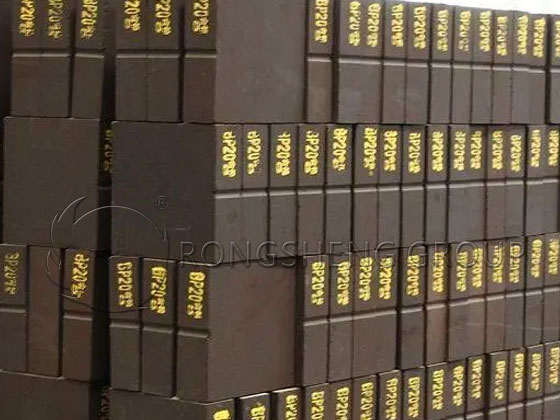
Other Specialty Kiln Bricks
For example, magnesia bricks have strong alkali resistance (suitable for cement kilns), and silica bricks have good acid resistance (suitable for acidic gas kilns); choose according to your needs. If the kiln experiences both large temperature fluctuations and moderate corrosion, mullite bricks are often used as an alternative.
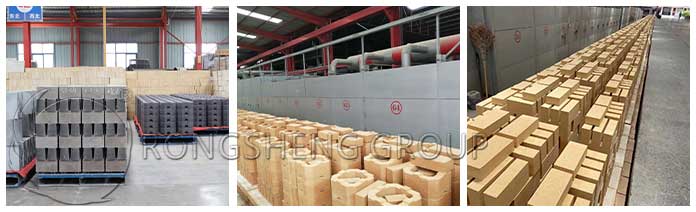
Don’t overlook details to avoid hidden problems
– Precise dimensions are crucial: During maintenance, the kiln lining space is fixed, and the length, width, and height of the refractory bricks must match the original design. Mullite bricks, due to their dense material, require even higher processing precision. Large deviations can lead to uneven joints, air leaks, ash accumulation, and even uneven stress causing the kiln bricks to crack.
– Visual inspection is essential: Upon receiving the kiln bricks, first examine the surface. Whether clay bricks, high-alumina bricks, or mullite bricks, they should be free of cracks, chipped corners, or bulges. These may indicate manufacturing defects and premature damage at high temperatures. Fine cracks on the surface of mullite bricks may indicate improper cooling processes and require special attention.
– Consider the laying method: If using refractory mortar, ensure the brick and mortar materials are compatible (e.g., mullite bricks with mullite-based refractory mortar). If dry-laying is used, the brick flatness is even more critical to avoid excessively large gaps.
– Ask about “after-sales service”: Reputable manufacturers will provide material testing reports (such as temperature resistance, compressive strength, and thermal shock stability data; for mullite bricks, pay special attention to the number of thermal shock cycles). Keep the reports during repairs so that you can troubleshoot the cause if problems arise later.
Choosing the right refractory bricks is like finding a partner; suitability is more important than price.
When repairing a kiln, don’t blindly pursue “high-end materials,” but also don’t overlook “specifically suited” materials like mullite bricks. First, understand the kiln’s temperature, environment, and stress conditions. For example, kilns that frequently start and stop should prioritize mullite bricks, those requiring long-term stable operation at high temperatures can choose high-alumina bricks, and corundum bricks are suitable for ultra-high temperature environments. Then, match the appropriate refractory brick material and size, and finally check the details. This will generally allow you to select reliable kiln bricks, enabling the kiln to “withstand high temperatures and operate stably” again.
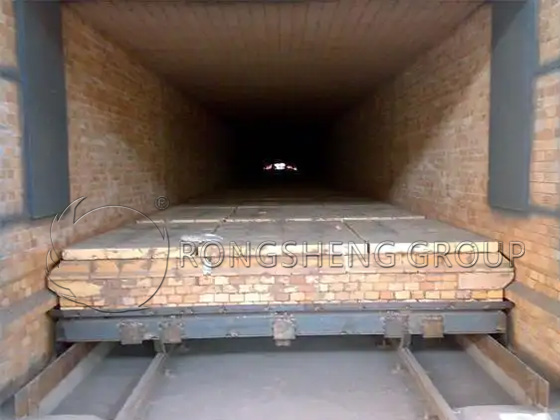
Performance Requirements of Refractory Bricks for Industrial Kilns
Industrial kiln refractory bricks. Due to different operating departments and even different parts of the same kiln, working conditions vary. Therefore, the requirements for refractory bricks also differ. Based on the general working conditions of ordinary industrial kilns, the following performance requirements for refractory bricks are summarized:
- Resistant to high-temperature heat loads, without softening or melting. The refractory bricks must have a sufficiently high refractoriness.
- Resistant to high-temperature heat loads, with no volume shrinkage and only uniform expansion. The material must have high volume stability, minimal residual shrinkage and expansion, and no crystal transformation or severe volume effects.
- Resistant to the combined effects of high-temperature heat loads and heavy loads, without loss of strength, creep, or collapse. The material must have sufficiently high room temperature strength and high-temperature hot strength, high load softening temperature, and high creep resistance.
- Resistant to rapid temperature changes or uneven heating, without cracking or spalling. The material must have good thermal shock resistance. 5. Resistant to chemical erosion from molten liquid, dust, and gas, without deterioration or corrosion. Good slag resistance is required.
- Resistant to the impact, collision, and abrasion from flames, furnace charge, and dust, without surface wear.
- Requires high density and wear resistance at both room and high temperatures.
- Resistant to the effects of high-temperature vacuum operations and atmospheric changes, without volatilization or damage. Low vapor pressure and high chemical stability are required.
Furthermore, to ensure the overall quality of structures or linings constructed from block kiln bricks, good slag resistance and airtightness are essential. For ease of construction, the material must have a neat shape, accurate dimensions, and meet certain tolerances, eliminating unacceptable defects. To withstand impacts during handling and potential mechanical vibrations and compression, the material must possess high strength at room temperature. For some special requirements, thermal and electrical conductivity must also be considered. It should be noted that while the above points can serve as a basis for evaluating the quality of refractory bricks, no single refractory brick can fully meet all of these requirements. When selecting or evaluating refractory bricks, the material’s outstanding characteristics must be adapted to the service conditions to maximize its utilization, while also considering economic factors.