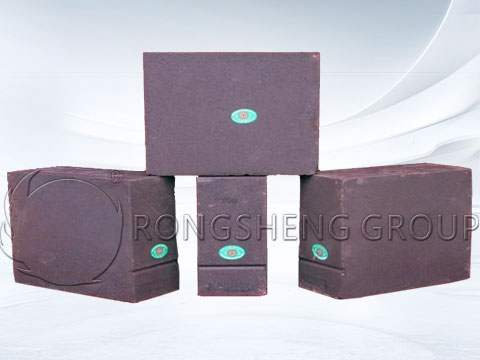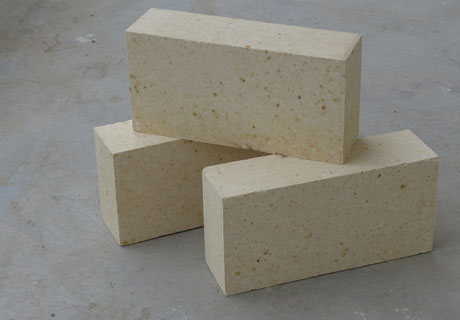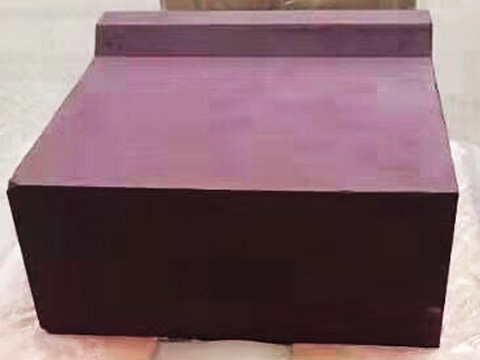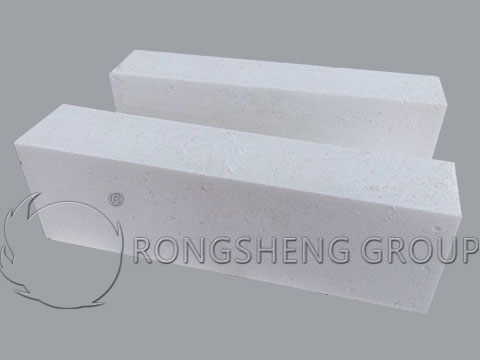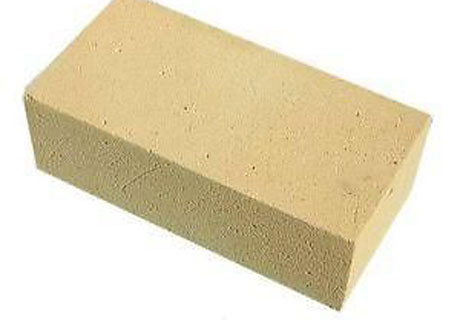
Checker bricks, also known as decorative checker bricks, are refractory bricks used in the construction of checkerboard structures in regenerators. They serve as the intermediate medium for heat exchange (heat storage and release) between high-temperature waste gas and preheated gas in the regenerator. Checker bricks are required to have certain resistance to erosion and thermal shock. Commonly used checker brick materials include refractory bricks, high-alumina bricks, magnesia bricks, forsterite bricks, chrome magnesia bricks, and zirconium corundum bricks. Different brick materials can also be used in sections according to the height of the checkerboard structure to improve its performance. Standard or specially shaped refractory bricks can be used.
Checker Bricks Used in Glass Kiln Regenerators
The working principle of a glass kiln regenerator is as follows: When high-temperature exhaust gas from the kiln enters the regenerator from top to bottom through the small furnace opening and air/gas channels, it heats the checker bricks, gradually increasing their temperature and accumulating heat. After the fire is switched, combustion air and gas enter the regenerator from bottom to top through the bottom flue, preheating the air and gas with the heat stored in the checker bricks. The checker brick temperature gradually decreases, achieving waste heat recovery and ensuring sufficient flame temperature to meet the requirements of glass melting.
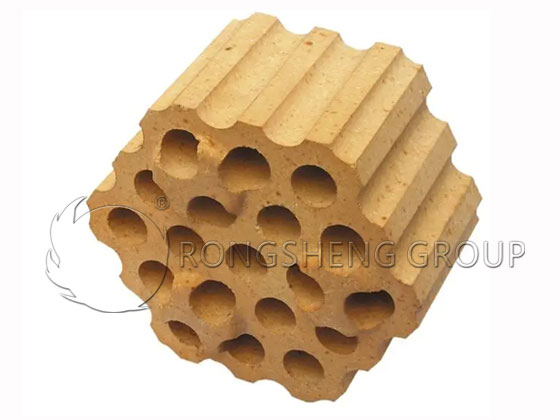
There are various structural forms of glass kiln regenerators, which can be classified according to whether the regenerators are interconnected.
(1) Connected Structure
The air regenerator below the small furnace on one side of the melting furnace is a connected chamber, and the gas regenerator is also a connected chamber. This type of structure is no longer used due to uneven airflow distribution, which easily leads to localized overheating and rapid burn-out of the checker bricks.
(2) Separated Structure
The regenerator on one side of the furnace is divided into several independent, unconnected chambers by each small furnace. Gas distribution is regulated by dampers on each branch flue, and each chamber is connected to both gas and air branch flues. Its advantages include convenient gas distribution regulation and good thermal maintenance conditions, but the partition walls occupy more space, reducing the effective volume of the grid. However, it is one of the most commonly used methods.
(3) Semi-Separated Structure
A semi-separated structure refers to dividing the flue below the furnace bars of the regenerator by each small furnace, without dividing the regenerator itself. The gas distribution regulating dampers remain on the branch flues.
(4) Two-Furnace Separated Structure
In this structure, two small furnaces share one regenerator or are separated into one regenerator, while the branch flues are separated by each small furnace to facilitate gas distribution regulation for each furnace. This structure is between the separated and semi-separated types. Due to its structural stability, ease of operation, and high heat conversion efficiency, this structure is currently adopted by most manufacturers.
(5) Two-section structure
This structure divides a single regenerator into two regenerators separated by a partition wall and connected by a vertical channel. Essentially, the regenerator is divided into a high-temperature zone and a low-temperature zone. This structure is primarily used to prevent the gas-liquid-solid transformation of sodium sulfate from corroding the checker bricks, ensuring this transformation occurs within the connecting channel of the regenerator, thus extending the service life of the checker bricks. However, this type of regenerator structure is complex and rarely used.
Checker Bricks and Regenerator Balls for the Regenerator Chamber of a Hot Blast Stove
The function of refractory materials in hot blast stoves is to provide insulation and withstand high-temperature loads. Therefore, the material and thickness of the furnace lining material for each part should be determined based on the temperature, load, and insulation requirements of the masonry, as well as the physical and chemical effects of flue gas on the masonry.
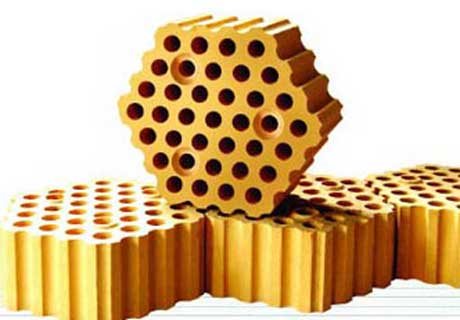
The most important requirements for checker bricks in the high-temperature zone of the regenerator chamber are good high-temperature volume stability, erosion resistance, and creep resistance. Silica bricks possess these characteristics and are inexpensive, thus they are widely used in high-temperature hot blast stoves both domestically and internationally. Based on the specific conditions in China, when the design temperature of the hot blast stove top is not less than 1400°C, and assuming good combustion of blast furnace fuel and high operational standards, silica bricks should be the preferred refractory material for the high-temperature zone of the hot blast stove. Simultaneously, the residual quartz in the silica bricks must be controlled to no more than 2%. When using silica bricks in hot blast stoves, it is crucial to carefully determine the lower limit of silica brick usage and install reliable temperature monitoring devices to ensure that the minimum operating temperature of silica bricks does not fall below 800°C during production operations (including shutdowns). When the design temperature of the hot blast stove top does not exceed 1400°C, using low-creep, high-density high-alumina refractory materials is more suitable for my country’s actual conditions and can fully utilize my country’s abundant bauxite resources. Currently, the creep resistance of high-alumina refractory materials abroad has reached a superior level. For example, the HD bricks from Holgoven in the Netherlands have a creep rate of no more than 0.2% under conditions of 1350°C, 0.2MPa, and 50h. The AC-8M bricks from Shinagawa in Japan have a creep rate of no more than 0.2% under the same conditions. Currently, the creep rate of high-alumina refractory materials in my country is no more than 1% under the same conditions, which is still significantly lower than the world’s advanced level. Meanwhile, given the current state of low-creep, high-alumina brick production in my country, it is essential to control impurities, particularly the content of alkali metals and alkaline earth metals, while strictly assessing the creep index of the bricks.
For the checker bricks in the middle and lower parts of the regenerator, high-alumina and clay-based refractory materials are typically used. With the increasing height of the regenerator in large hot blast stoves, the pressure exerted by the upper checker bricks on the lower refractory materials is also increasing. Furthermore, according to foreign investigations into the damage of checker bricks in large high-temperature hot blast stoves, the cracking and breakage of the lower checker bricks due to periodic temperature fluctuations is constantly increasing. Therefore, in addition to continuing to control the creep characteristics of the lower clay bricks, higher requirements are placed on the room temperature compressive strength and thermal shock resistance (resistance to rapid heating and cooling).
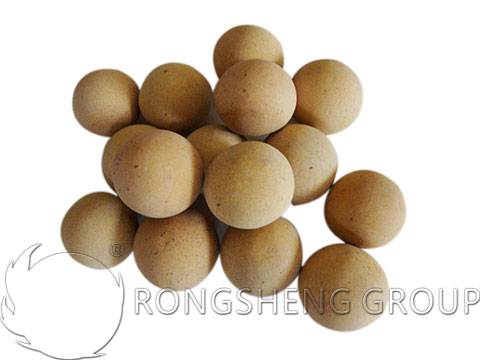
In the regenerator of spherical hot blast stoves, refractory balls are used instead of checker bricks. Spherical hot blast stoves using refractory balls instead of checker bricks are used in small blast furnaces. Refractory balls possess superior thermal properties, including a large thermal surface area, high heat capacity, large heat exchange area, and high blast temperature. High-alumina refractory materials are commonly used in high-temperature zones, while clay-based refractory materials are preferred in low-temperature zones.
RS Refractory Bricks Factory‘s main products include: clay bricks, high-alumina bricks, thermal shock resistant andalusite bricks, cordierite-mullite bricks, corundum-mullite bricks, low-creep high-alumina bricks, dense clay bricks, pipe composite bricks, various checker bricks for hot blast stoves, AZM zirconium-corundum refractory balls, aluminum-zirconium-chromium composite refractory balls, low-creep high-alumina balls, and machine-made high-alumina balls in various sizes from Ф40mm to Ф80mm. Contact RongSheng for free samples and quotations.