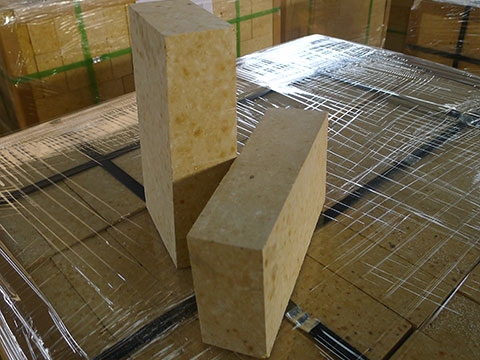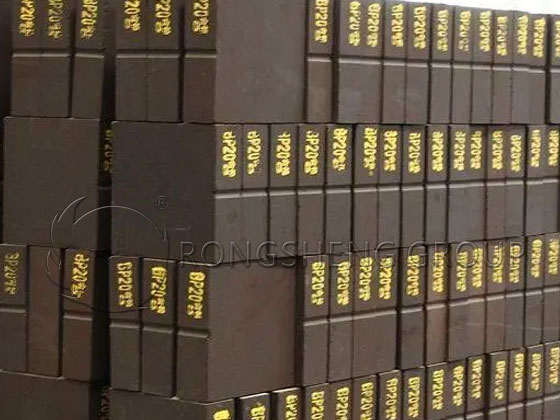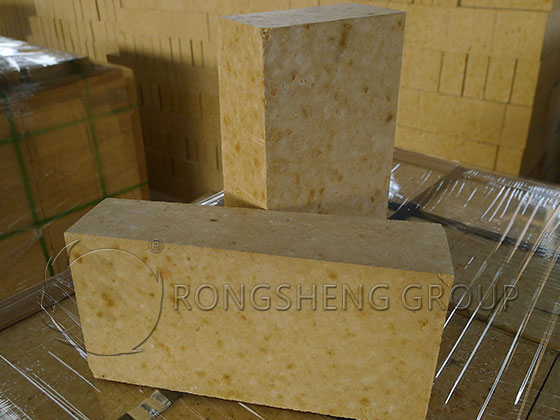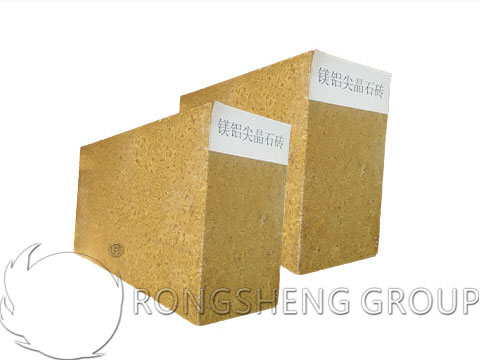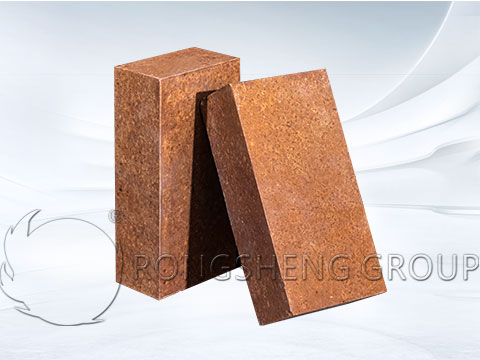
Alumina-magnesia-carbon bricks have been applied in my country’s steelmaking industry, significantly extending the service life of furnace linings, ladles, and furnace covers in electric arc furnaces and converters, resulting in substantial economic benefits. Previously used clay bricks and high-alumina bricks had low average lifespans, high costs, and were incompatible with the development of the steelmaking industry.
Alumina-Magnesia-Carbon Bricks are Carbon-based Refractory Materials
Alumina-magnesia-carbon bricks are carbon-based refractory materials with aluminum oxide as the matrix. They are made from high-alumina bauxite, corundum-magnesia-alumina spinel, magnesia sand, flake graphite, and other materials, or with the addition of silicon carbide and other additives, bound with water glass or resin, and then formed under high pressure and low temperature. The type of magnesia-magnesia-carbon brick depends on the size of the ladle and the application conditions. Generally, small and medium-sized ladles use inferior raw materials and water glass as a binder. Large and medium-sized ladles, or ladles used for continuous casting and ladle refining, must use high-quality raw materials and resin binders. Characteristics of magnesia-magnesia-carbon bricks: The addition of a small amount of magnesia sand to the raw materials improves the slag resistance and high-temperature plasticity of the bricks; flake graphite improves slag wettability and reduces the possibility of slag adhesion; corundum-magnesia-alumina spinel improves the high-temperature stability of the bricks. Compared with high-alumina bricks, alumina-magnesia-carbon bricks have better thermal shock resistance and slag resistance. It is not only high in strength and corrosion-resistant, but also possesses advantages such as non-shrinkage, non-cracking, non-peeling, erosion resistance, non-slag adhesion, and non-contamination of molten steel. Disadvantages include a relatively high thermal conductivity, resulting in significant heat dissipation and a tendency for cold steel formation. Therefore, when using magnesia-alumina-carbon bricks as ladle linings, insulation measures should be taken.
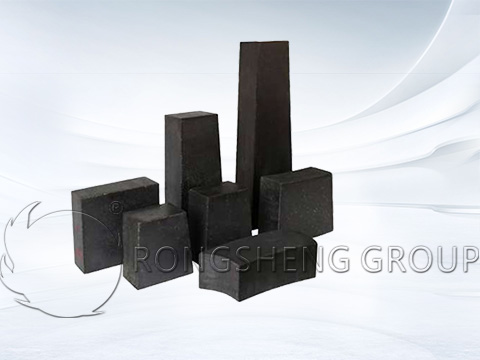
Application Cases of Alumina-Magnesium-Carbon Bricks
Currently, alumina-magnesium-carbon bricks are mainly used for lining bricks in steel ladles and tapping troughs. Tests on 5-ton electric furnaces and 15-ton ladles have shown that using alumina-magnesium-carbon bricks generally results in a ladle lifespan of 60-70 cycles, an average of 64 cycles per year, a maximum of 79 cycles, and a minimum of 51 cycles, with an erosion rate of 0.7-0.8 mm/cycle. Ladles lined with clay bricks average only 10.4 cycles per year. In comparison, the service life of alumina-magnesium-carbon bricks is increased by 5-7 times. In elevated 10-ton electric furnaces and 20-ton ladles, the ladle lifespan can reach over 80 cycles, saving each furnace over 70,000 yuan compared to using high-alumina bricks. Trials on 200-ton open-hearth furnaces and 100-ton ladles showed a 3-fold increase in service life compared to clay bricks. Trials on 225-ton argon-blown continuous casting ladles increased the ladle lifespan from 6 cycles to 22 cycles. When a steel ladle was cleaned after 10 uses, it was found that the surface of the alumina-magnesia-carbon bricks remained largely unchanged. After 20 uses, the erosion of the bricks was very slight, and after 50 uses, the average erosion rate of the remaining half was less than 1 mm. Using alumina-magnesia-carbon bricks to construct steel ladles is simpler than monolithic casting, requires no tools or equipment, and is easy to install and dismantle, easy to master, and saves labor and time.
Application of Alumina-Magnesia-Carbon Bricks in Steel Ladles
Alumina-magnesia-carbon bricks are non-fired products made from high-grade high-alumina bauxite clinker, fused magnesia or sintered magnesia, and graphite, with liquid phenolic resin as a binder. The physicochemical properties of alumina-magnesia-carbon bricks for steel ladles produced by some Chinese manufacturers are shown.
Based on the development of alumina-magnesia-carbon bricks, my country has also developed alumina-magnesia spinel carbon bricks for steel ladles. Alumina-magnesia spinel carbon bricks have a certain proportion of pre-synthetic magnesium-aluminate spinel added to the brick material, and their performance is superior to that of comparable alumina-magnesia-carbon bricks.
Alumina-magnesia-carbon bricks as refractory materials for refining furnace linings
Alumina-magnesia-carbon bricks, as refractory materials for refining furnace linings, fully utilize the strong slag erosion resistance of magnesia and the low expansion and high thermal conductivity of carbon, compensating for the poor spalling resistance of magnesia. The excellent properties of alumina-magnesia-carbon bricks are:
(1) MgO and C do not have a eutectic relationship at high temperatures. The melting point of carbon is above 3000℃, and the melting point of MgO reaches 2800℃; both are refractory raw materials with excellent high-temperature resistance.
(2) Excellent resistance to alkaline slag erosion. MgO has strong resistance to alkaline slag and high-iron slag. Meanwhile, graphite has a large wetting angle with slag, making it difficult for molten slag to penetrate, resulting in a thin metamorphic layer.
(3) Al₂O₃ reacts with MgO in the matrix at high temperatures to form aluminum-magnesium spinel. MA spinel has a low elastic modulus and a low coefficient of thermal expansion, allowing it to transfer secondary MF spinel from periclase. This process, accompanied by volume expansion, can block pores and inhibit further slag penetration.
The large amount of CaO in the slag reacts with Al₂O₃ to form high-melting-point columnar CA₆ and a small amount of CA₂. The formation of CA and other minerals consumes a large amount of CaO in the slag, increasing its viscosity and reducing its penetration capacity. Simultaneously, at high temperatures, the spinel in the matrix can capture FeO and MnO in the slag, forming a spinel solid solution, which further improves the slag resistance of aluminum-magnesium-carbon bricks. Due to its expansion properties, AMC bricks exhibit tight joints and good overall integrity after use.
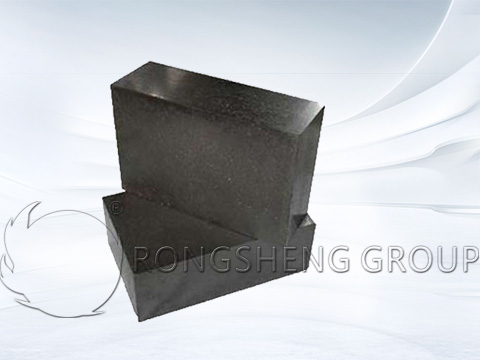
Problems with the Application of Alumina-Magnesium-Carbon Bricks in Steel Ladles
Most large and medium-sized refining steel ladles in China use alumina-magnesium-carbon bricks as the working lining. Due to the high carbon content of these bricks, they may increase the carbon content of the molten steel, affecting the smelting of low-carbon and ultra-low-carbon steels. Furthermore, their high thermal conductivity increases the temperature drop of the molten steel, hindering temperature control in casting technology.
Due to the chemical reaction between Al2O3 and MgO in the matrix of the alumina-magnesium-carbon steel ladle bricks, aluminum-magnesium spinel is formed. This causes volume expansion of the product, leading to stress in the ladle working lining during use, causing the brick structure to peel off and affecting safety.
To improve market competitiveness, a steel plant added an LF refining system to achieve ladle refining with electric arc heating, gas stirring, and composition adjustment. By enhancing kinetic and thermodynamic reaction conditions, the molten steel is purified and homogenized in a short time, achieving a refining effect. However, the high-temperature stirring and scouring, the erosion of strongly alkaline slag, and the prolonged immersion in molten steel during refining make the working environment of the ladle lining extremely harsh. To meet the normal operation of the LF refining system in steel plants and the working conditions of steel ladles, long-life steel ladle aluminum-magnesium-carbon lining bricks have been developed. Al2O3-MgO-C series steel ladle lining bricks feature good high-temperature performance, slag resistance, and excellent thermal shock stability.
Control of the Manufacturing Process of Alumina-Magnesium-Carbon Bricks
Alumina-magnesium-carbon bricks, used as refractory linings for refining furnaces, fully utilize the strong slag erosion resistance of magnesia sand and the low expansion and high thermal conductivity of carbon, compensating for the poor spalling resistance of magnesia sand. Alumina-magnesium-carbon bricks are mainly made from high-quality bauxite, magnesia sand, fused white corundum, aluminum-magnesia spinel, and graphite, which are mixed and extruded. The specific manufacturing process is as follows:
- Crushing and Particle Size Requirements
1) After crushing and pulverizing the high-quality bauxite and magnesia sand raw materials according to grade, they are sieved and milled to obtain particles and fine powders of 5-3mm, 3-1mm, 1-0mm, and ≤0.088mm. The particle size requirements are: the total weight of particles exceeding the upper and lower limits of each particle size should not exceed 5%; the fine powder should contain at least 85% particles ≤0.088mm.
2) High-quality bauxite, magnesia, fused white corundum, aluminum-magnesium spinel, and graphite must not be exposed to moisture during processing, transportation, and storage. The moisture content of processed high-quality bauxite granules must be ≤0.5%, and the moisture content of magnesia (granules and fine powder) must be ≤0.5%. Clumped magnesia fine powder must not be used in production and must be used within 72 hours of grinding.
- Mixing Control
1) The fine powder portion is pre-mixed using a V-type mixer.
2) Mixing is performed using a JB600 high-speed mixing mill. The mixing mill must be thoroughly cleaned before unloading.
3) Liquid resin is added in a dedicated container and stored in a constant temperature chamber at 35℃. The resin is added according to weight, and before mixing, it is stored in a 40℃ insulated box. The resin must be added evenly and slowly; it must not be added all at once.
4) Feeding sequence: Add granules, mix, add 30% resin, add graphite and fine powder, add 70% resin and discharge. Temperature should be controlled between 35~45℃.
- Molding Control
1) Use a 1000t friction brick press for molding, following the principle of “light pressure first, then heavy pressure, venting air by lifting, and gradually increasing pressure.”
2) Before molding, check if the mold meets the production instructions. Conduct a comprehensive inspection of the first brick pressed; normal production can only proceed if all requirements are met.
3) Verify the unit weight during molding. Add all the clay at once before pressing; do not add or smear clay into the mold during molding.
4) For bricks weighing ≤5Kg, the number of impacts should be ≥6 times/brick. For bricks weighing 5~15Kg, the number of impacts should be ≥10 times/brick. For bricks weighing ≥15Kg, the number of impacts should be ≥12 times/brick.
- Pre-drying and Heat Treatment Control
1) The natural drying time for qualified brick blanks shall not be less than 24 hours and not more than 48 hours.
2) All aluminum-magnesium-carbon bricks shall be dried in an electric dryer under the following drying regime: 100℃×24h + 200℃×24h.
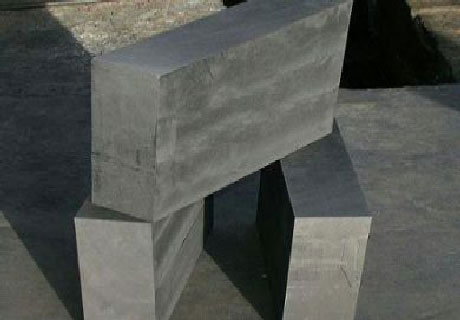
Construction Process Control of Aluminum-Magnesium-Carbon Bricks for Steel Ladles
Aluminum-magnesium-carbon bricks are one of the commonly used lining materials for steel ladles. The following construction process should be followed during the lining construction:
- Construction Sequence
Permanent layer pouring for the ladle wall → Permanent layer pouring for the ladle bottom → Placement of water inlet seat bricks → Laying of permeable bricks and aluminum-magnesium-carbon bricks at the ladle bottom → Filling gaps with corundum binder → Laying of aluminum-magnesium-carbon bricks for the ladle wall → Laying of aluminum-magnesium-carbon bricks for the ladle wall slag line → Laying of aluminum-magnesium castable refractory at the ladle opening → Curing → Baking.
- Construction of Aluminum-Magnesium-Carbon Bricks for the Ladle Wall
1) Use wet-laid aluminum-magnesium mortar. The mortar should not be too thin, and the mortar between bricks should be full, with brick joints less than 1mm.
2) Each layer of bricks should be laid flat, and the brick joints between layers must be staggered. During construction, the principles of “solid back, tight joints, and curved joints” should be followed, and the joints between upper and lower layers should be staggered.
3) The size of the door-jointing bricks should be no less than 50mm, and the door-jointing area should avoid the trunnion position. The door-jointing positions between layers should be staggered by at least 200mm.
- Bottom-lining Masonry Construction Process
1) The permeable bricks and water outlet seat bricks must be placed flat and correctly positioned.
2) After the water outlet seat bricks and permeable bricks are in place, the gaps between them and the surrounding bottom-lining bricks should be filled with corundum binder.
- Pouring Construction Requirements
1) Check the construction equipment (mixer, water supply, vibrator, etc.).
2) Turn on the mixer, add the mixture, dry mix for 1 minute, then add 2/3 of the water, then slowly add the remaining water, wet mix for 3-5 minutes, and then discharge.
3) After each pour, vibrate with a vibrator to ensure sufficient air release from the mortar.
4) Pouring construction must be continuous before and after, and the stoppage time during the process should not exceed 20 minutes.
- Requirements for Bottom Excavation and Repair Construction
1) Remove the base bricks and surrounding adhesive material, and clean thoroughly.
2) Hoist the new permeable bricks and base bricks into their designated positions.
3) Fill the gaps between the permeable bricks, the sprue base bricks, and the bottom aluminum-magnesium-carbon bricks with corundum adhesive.