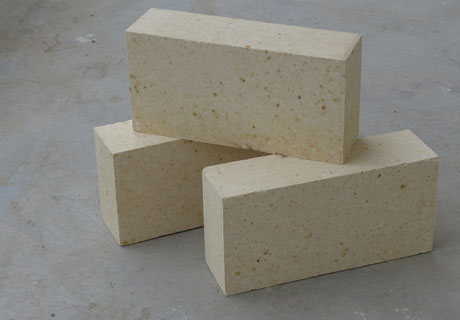
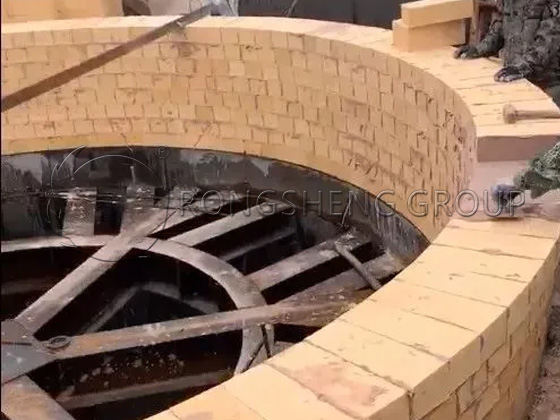
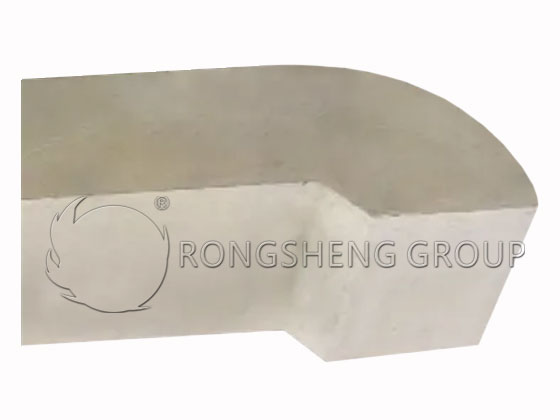
Raw bauxite ore mined from mines, sintered at 1600-1650℃ to form calcined bauxite, is the main raw material for manufacturing high-alumina refractory bricks. The birth of RS high-alumina bricks, forged through intense heat, is a rigorous contest against even the slightest error.
The Production Process of Bauxite to High-Alumina Bricks
From the moment bauxite enters the factory, it must undergo a rigorous and demanding process:
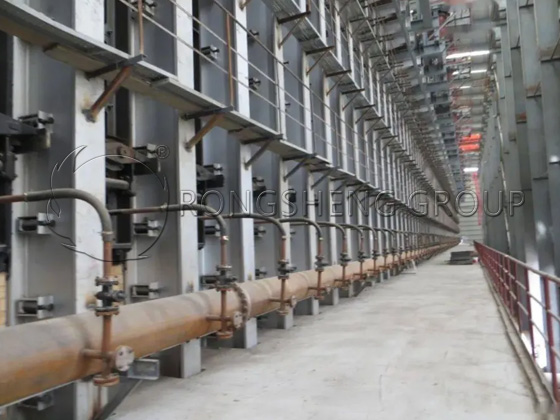
- Raw bauxite is calcined into clinker in a vertical kiln exceeding 1600℃;
- Imperfections are removed through manual inspection, followed by crushing, proportioning, and mixing;
- It is then molded under high pressure of 300-1200 tons;
- The brick blanks undergo dehydration for dozens of hours in a drying kiln;
- Finally, they are sintered in a high-temperature tunnel kiln above 1450℃, completing their physicochemical transformation.
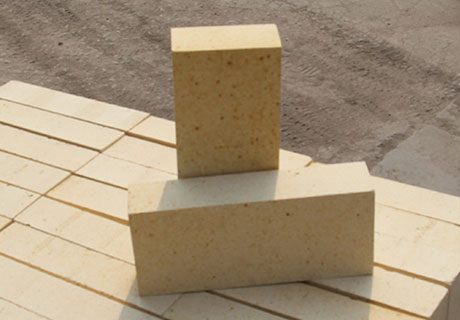
The detailed process of Rongsheng high-alumina refractory bricks from raw materials to finished products is as follows.
-
A Brick’s Control Begins with Raw Materials
After raw materials arrive at the factory, they undergo meticulous manual screening and are sampled and tested for their physicochemical composition by a testing center. Then, a crushing and processing order is issued. These processes ensure the stability of the raw materials, providing a foundation for subsequent work.
-
Particle Structure Determines the Brick’s “Skeleton”
The tested raw materials enter the crushing, screening, and grading stages. Particles of different sizes must be combined in proportion; this step directly affects the brick’s density, strength, and service life. If the gradation is unreasonable, it’s difficult to correct later. This stage involves many processes and a slow pace, but skipping steps is not allowed.
-
The “Digital Alchemy” of Crushing and Proportioning
In the batching and mixing stage, all parameters come from confirmed process standards. The amount of material to weigh, the amount of water added, and the mixing time all have clearly defined ranges. Key parameters are controlled by a DCS system, and the entire process is recorded.
After batching, the materials are mixed in a high-speed mixing mill. First, dry mix for 3-5 minutes to make the material initially uniform. Then, add a binder that matches the process (such as water, calcium lignosulfonate, resin, silica sol, phosphoric acid, aluminum dihydrogen phosphate, sodium silicate, brine, etc.) and mix for 8-12 minutes until a uniform and suitable clay material is formed.
-
Molding, More Than Just “Pressing Out”
Rongsheng Refractory uses a highly automated CNC brick press to produce and stack the brick blanks. The molding pressure is precisely adjusted according to product requirements. The molding cycle is precisely controlled within 15-25 seconds per brick, ensuring high efficiency while guaranteeing that each brick blank achieves over 95% of its theoretical density.
After molding, the brick is not yet ready for use. The mold condition, semi-finished product dimensions, and surface condition are all checked one by one. This stage controls whether the brick’s internal structure is uniform and whether it is prone to deformation during later firing.
-
Repeatedly Verified Firing Curves
Drying, heating, holding, and cooling—each step has corresponding temperature and time requirements. The firing speed is not important; what matters is whether the firing curve specified for that batch has been completed. This step determines the final performance of the brick.
-
Quality Inspection Reconfirms Before Shipment
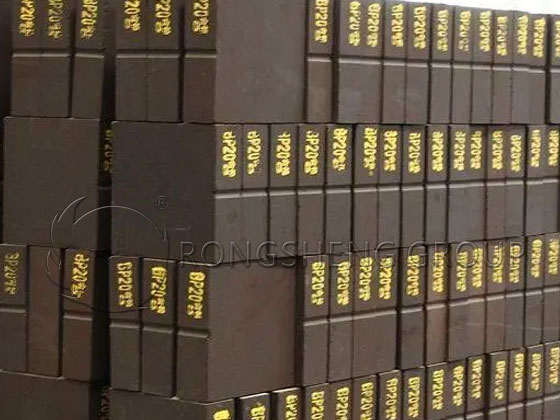
Leaving the kiln does not mean the end of the process. Every brick must pass rigorous quality testing before it can be labeled “Made by Rongsheng.” After the finished bricks are fired, they undergo batch sampling inspection by a testing center to determine their physicochemical properties, including alumina (Al₂O₃), ferric oxide (Fe₂O₃), silicon dioxide (SiO₂), compressive strength, bulk density, softening under load, reheat linear change, thermal shock resistance, high-temperature flexural strength, and appearance. Only those that pass the tests are packaged and stored; substandard products are prohibited from leaving the factory.
From a simple piece of bauxite ore to a high-quality, high-alumina refractory brick that can withstand high temperatures, Rongsheng Refractory strictly controls quality to provide customers with efficient and reliable high-alumina brick products.