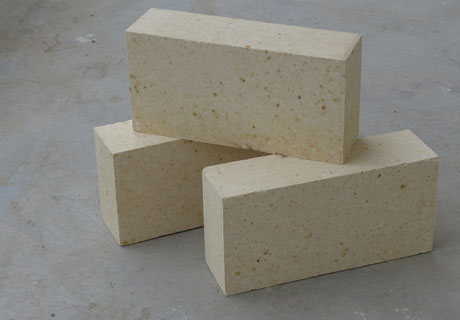
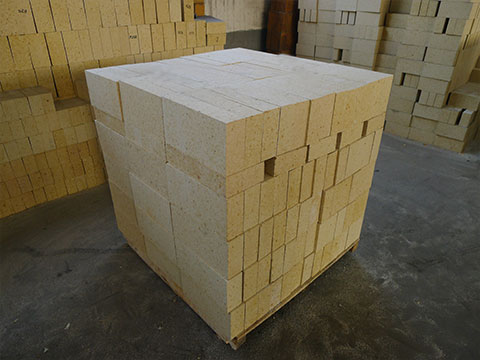
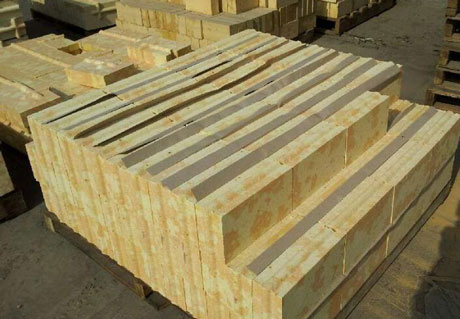
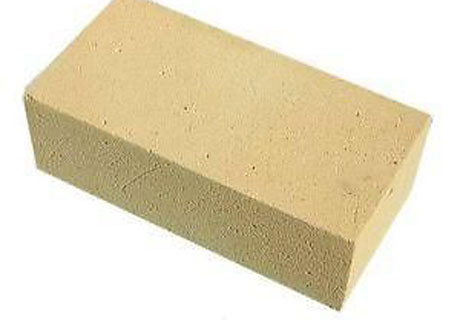
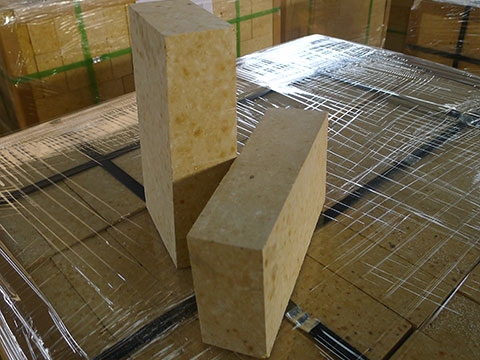
In the development of refractory materials, the use of silica refractory bricks for steelmaking has been limited as much as possible. Among these efforts, research was conducted on coarse-particle structure refractory bricks to improve bulk density, high-temperature strength, and load softening temperature, and the development of super-duty refractory bricks was undertaken to minimize the content of harmful alumina, alkaline substances, and titanium dioxide. However, despite these efforts, steelmaking conditions remain extremely demanding for silica bricks. Due to the rapid replacement of alkaline refractory bricks, silica bricks disappeared from the market—a process noteworthy in the technological history of refractory materials. Now, only electric arc furnace lids remain, a consequence of the special operating conditions of the lids and the characteristics of silica bricks.
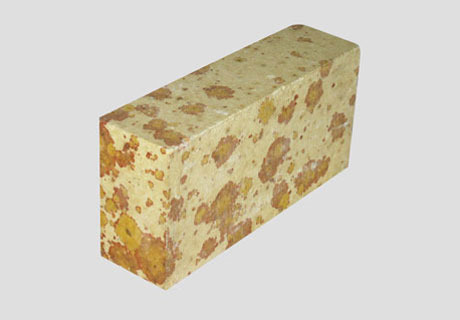
Properties of Silica Bricks
- Refractoriness and Load Softening Temperature: The refractoriness of silica bricks is generally between 1690 and 1730℃, while their load softening temperature is relatively high, around 1650℃. The close proximity of their load softening temperature and refractoriness is primarily due to the main crystalline phase being a network structure of tridymite with spearhead twinning, and the matrix being a highly viscous glassy phase.
- Slag Resistance: Silica bricks are acidic refractory materials, exhibiting strong resistance to acidic and weakly acidic slags and corrosive gases.
- High-Temperature Volume Stability: During heating, silica bricks undergo not only thermal expansion but also crystal transformation accompanied by volume expansion. If untransformed residual quartz remains within the brick, it will continue to transform into tridymite or cristobalite at high temperatures, resulting in significant volume expansion.
- Thermal Shock Stability: Silica bricks have poor thermal shock resistance, requiring only 1-2 water cooling cycles at 850℃. The reason lies in the fact that silica bricks undergo a crystal transformation during rapid cooling at high temperatures, resulting in significant volume changes. This is a major weakness of silica bricks.
Silica bricks are acidic refractory materials, possessing strong resistance to acidic slag or acidic melts, but poor resistance to alkaline substances. They are easily damaged by oxides such as Al₂O₃, K₂O, and Na₂O, but exhibit good resistance to oxides such as CaO, FeO, and Fe₂O₃.
Therefore, silica bricks are mainly used for lining the carbonization chamber, combustion chamber, and partition walls of coke ovens. Approximately 73% of the refractory materials used in a coke oven are silica bricks. They are also used in glass furnaces and their roofs, walls, high-temperature load-bearing parts of hot blast stoves, carbon roasting furnaces, and other thermal kilns. To improve the production capacity of modern large coke ovens, it is necessary to thin the carbonization chamber, combustion chamber, and partition walls, thus requiring the use of highly dense, high-thermal-conductivity silica bricks. There are a wide variety of silica bricks, which can be classified according to their use into silica bricks for coke ovens, silica bricks for hot blast stoves, silica bricks for electric furnaces, silica bricks for glass kilns, etc. They can also be classified according to the complexity of their shape into standard bricks, common bricks, irregular bricks, and special-shaped bricks.
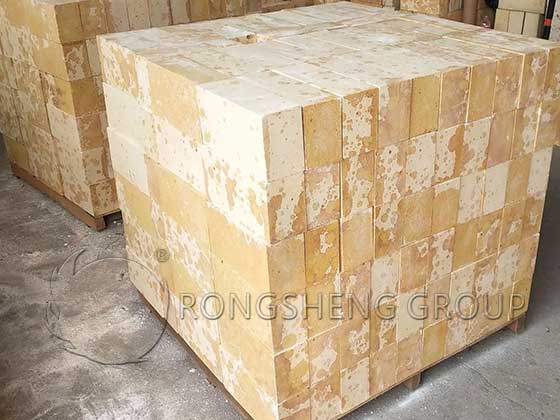
Improving the Corrosion Resistance of Silica Bricks
However, the increasing size of electric furnaces, the installation of dust collection ports, rising energy consumption, and the heating effect of burners have contributed to the melting loss of silica bricks forming the furnace cover, resulting in uneven losses. Due to the increase in high-alumina bricks, ramming materials, and basic refractory bricks, their composition has become more generalized. Silica bricks are thus gradually being replaced. However, corresponding efforts have been made to improve the corrosion resistance of silica bricks. Treatment processes such as tar impregnation or chromium oxide impregnation not only preserve the characteristics of silica bricks but also successfully suppress the amount of low-melting-point substances infiltrating into silica refractories.
The quality and characteristics of impregnated refractories, and the state of chromium oxide impregnated refractories after use. Although such treatments do not fundamentally improve the corrosion resistance of refractory bricks, a radical solution to these problems is difficult.
Silica bricks for coke ovens, being furnace lining materials used for many years, exhibit slow changes. Materials that are frequently used and do not undergo secondary changes have become the target. Therefore, silica is primarily composed of tricite (density 2.27 g/cm³), with the content of silica (density 2.65 g/cm³) and cristobalite (density 2.23 g/cm³) minimized to obtain a material with low density. Furthermore, dense materials with low apparent porosity are becoming a target for property improvement.
The apparent porosity of silica bricks is being varied. Experiments are also underway to develop denser silica bricks with less variation. Previously, for refractory bricks used for furnace bottoms, an apparent porosity of below 20% was required. In 1964, the United States published a method for densification by adding copper oxide and titanium oxide; some of these methods are currently in practical testing, aiming to improve the heat transfer efficiency of the furnace walls, i.e., to infer increased productivity by improving the heat transfer effect of the coke oven walls (larger kilns and increased furnace height).
Therefore, thin-walled furnace lining materials with high thermal conductivity are required for the partition walls of the combustion chamber and carbonization chamber. Dense refractory bricks with a bulk density of 1.95 g/cm³ (apparent porosity of 17.6%) have a thermal conductivity approximately 25.8% higher than those of general products (bulk density 1.72~1.80 g/cm³, apparent porosity 22.4%~25.8%). Generally, the US method involves inferring the degree of densification by adding additives. Alternatively, by using easily densified raw materials and making efforts in particle size adjustment, raw material selection, and molding, low porosity can also be achieved.
The mass ratio of dense refractory bricks in Japan and the US. Adding copper oxide is beneficial for thermal conductivity, but adding this component to silica refractory bricks is undesirable due to its impact on the load softening temperature and compositional changes during use. It is generally believed that low porosity can be achieved within a limited range through the inherent structure of silica bricks.
The relationship between porosity and thermal conductivity, without losing the properties of silica bricks, makes improving thermal conductivity a research topic. Densification also improves air permeability, abrasion resistance, and high-temperature strength. When both are considered simultaneously, the importance of densification in silica bricks becomes very clear.