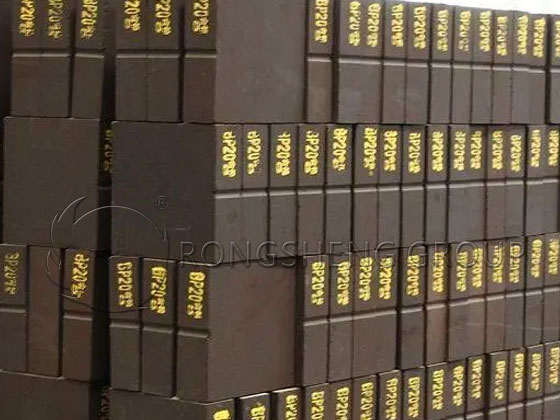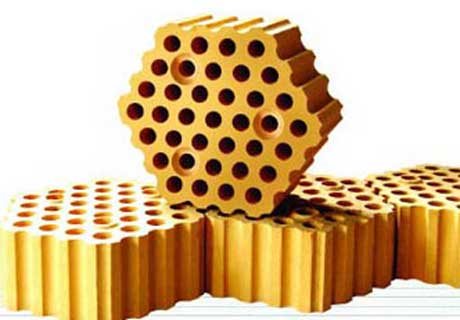
Refractory materials for various sections of a blast furnace shaft should be selected based on specific operating conditions, including temperature, the extent of erosion by slag and iron, and the degree of mechanical abrasion. For the upper and middle sections of the shaft, conventional materials such as phosphorus-impregnated fireclay bricks or high-alumina bricks are suitable; for the lower section, high-performance materials—most notably silicon carbide bricks—should be prioritized. Thanks to their exceptional resistance to erosion, thermal shock, abrasion, and the formation of accretions (scabs), silicon carbide bricks have become the ideal choice for the lining of the lower blast furnace shaft.
Selection of Refractories for the Upper and Middle Sections of the Blast Furnace Shaft
The blast furnace shaft is generally divided into three sections: upper, middle, and lower. The upper and middle sections operate at relatively low temperatures and are largely unaffected by slag erosion; consequently, the requirements for refractories in these areas focus primarily on standard performance characteristics.
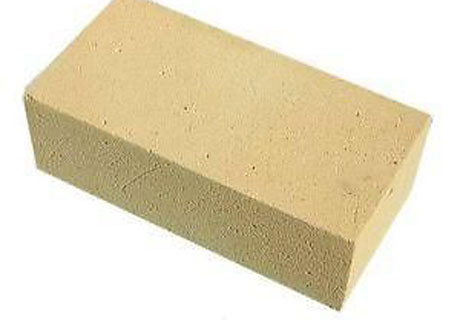
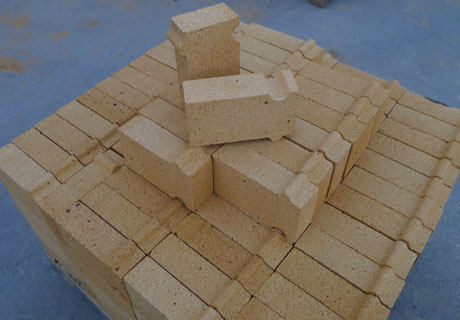
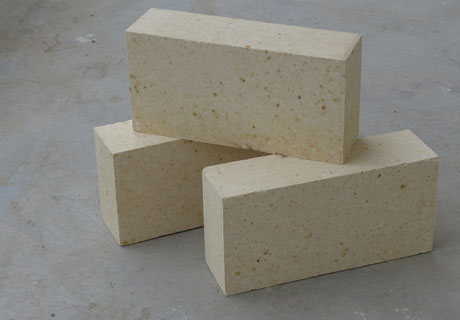
For small blast furnaces, phosphoric acid-impregnated fireclay bricks or high-alumina bricks are typically used in the upper and middle shaft sections. Large blast furnaces often employ composite high-alumina bricks containing sillimanite or andalusite. Dense fireclay bricks are also utilized in these sections.
As operating temperatures rise and conditions become increasingly demanding in large and medium-sized blast furnaces, phosphoric acid-impregnated fireclay bricks are being adopted for the upper shaft, and there is a trend toward using low-creep high-alumina bricks in the upper and middle sections; small blast furnaces may also utilize high-alumina bricks with an alumina content exceeding 75%.
Selection of Refractories for the Lower Section of the Blast Furnace Shaft
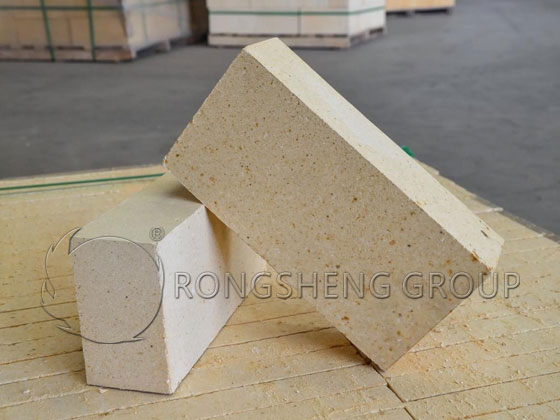
The lower section of the blast furnace shaft is the area most susceptible to damage. It is the zone of most intense heat exchange within the furnace; the descending burden exerts significant mechanical friction on the lining, while the area is subjected to severe erosion by gas-borne dust and intense alkali metal attack. Therefore, high-quality refractories—such as premium fireclay bricks, high-alumina bricks, corundum bricks, or silicon carbide bricks—must be used in this section.
International practice shows that some steel plants use high-alumina bricks, clay-bonded silicon carbide bricks, or silicon carbide-graphite bricks, as well as fused high-alumina bricks or synthetic mullite bricks. In China, the use of corundum bricks and silicon carbide composite bricks is more common.
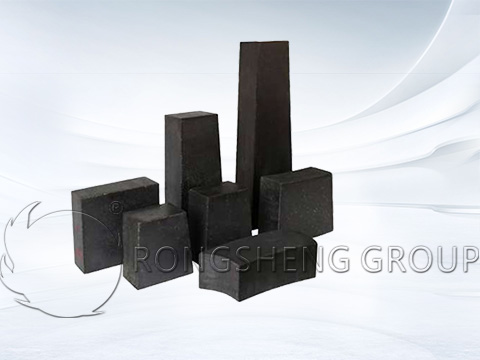
Ceramic-bonded silicon carbide bricks are also used in the lower shaft section. In terms of performance, silicon carbide bricks are clearly superior to phosphoric acid-impregnated fireclay bricks, though they are more expensive. While phosphoric acid-impregnated fireclay bricks are low in cost, the impregnation process is complex, making many manufacturers reluctant to produce them. Consequently, low-porosity fireclay bricks—which offer specifications comparable to the impregnated variety—are currently the preferred alternative.
Performance Advantages of Silicon Carbide Bricks
Currently, the hearths of blast furnaces are primarily lined with materials such as alumina-carbon bricks, microporous alumina-carbon bricks, semi-graphitic carbon bricks, self-baking carbon bricks, and carbonaceous ramming masses. In contrast, silicon carbide bricks are widely used for the lining of the lower furnace shaft.
Silicon carbide bricks are considered an ideal lining material for the lower furnace shaft due to the following performance advantages: First, they exhibit a low erosion rate, resulting in minimal material loss during operation. Second, they do not react chemically with blast furnace slag, offering excellent resistance to slag corrosion. Third, they possess good thermal shock stability, allowing them to withstand the drastic temperature fluctuations within the furnace. Fourth, they demonstrate high wear resistance, enabling them to endure the continuous abrasion caused by the descending furnace burden. Fifth, they are effective in preventing the formation of accretions (crusts).
Furthermore, the use of silicon carbide bricks as a lining in the lower furnace shaft helps improve the thermal efficiency of the blast furnace and extends the service life of the furnace lining, yielding significant overall economic benefits.
Do high-alumina bricks perform better when their alumina content is higher?
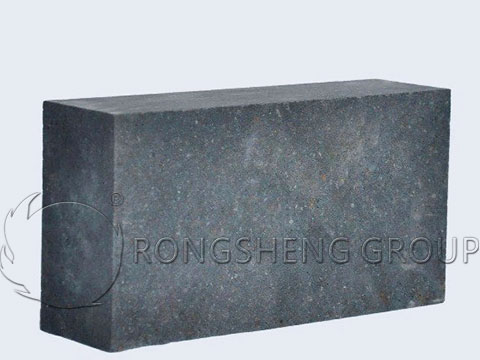
High-alumina bricks are classified into three grades (I, II, and III) based on their alumina content; they are silicate-based refractory materials containing more than 48% aluminum oxide. They are produced through the formulation and calcination of aluminum oxide or other high-alumina raw materials. These bricks exhibit high thermal stability, a refractoriness exceeding 1770°C, and excellent resistance to slag. The specific properties of high-alumina bricks are largely dependent on their alumina content.
The performance of high-alumina bricks is also influenced by their production process. The manufacturing method for high-alumina refractory bricks is fundamentally similar to that of clay bricks, though certain process parameters differ. The production sequence includes grinding, mixing, forming, drying, firing, testing, and packaging. While they demonstrate good compressive strength at lower temperatures, this strength decreases slightly at high temperatures.
High-alumina refractory bricks are similar to clay bricks in that they contain a high proportion of calcined material (clinker)—up to 90%–95%. This clinker is graded, screened, and crushed. The firing temperature is relatively high; for instance, Grade I and Grade II high-alumina bricks are typically fired in a tunnel kiln at temperatures between 1500°C and 1600°C.
The sintering temperature for high-alumina bricks depends on the sintering characteristics of the bauxite. For “special grade” and Grade I bauxite clinker (with a bulk density greater than 2.0 g/cm³), the raw material structure is uniform, though it may contain higher levels of impurities. This facilitates sintering, but the temperature range is quite narrow, making the material prone to over-firing.
When using Grade II bauxite clinker (with a bulk density greater than 2.55 g/cm³), the material is more resistant to sintering—partly due to expansion and loosening effects caused by “secondary firing”—which necessitates a slightly higher firing temperature. High-alumina bricks are manufactured using Grade III bauxite clinker. They exhibit lower density and withstand lower temperatures compared to standard high-alumina bricks, though their temperature resistance is slightly superior to that of fireclay bricks; they are fired in an oxidizing atmosphere.
Issues such as brick slippage can occur due to thermal expansion. Thermal expansion refers to the increase in a product’s dimensions (length or volume) as temperature rises during heating, a phenomenon that can lead to bricks detaching or falling out of place. There are two standard test methods for measuring the thermal expansion of high-alumina bricks. Both rely on the principle of heating a sample to a specified temperature and monitoring dimensional changes; by measuring the linear expansion and calculating the average linear expansion coefficient over a specific temperature range, the material’s expansion characteristics are determined.