During the daily operation of a coke oven, the extent of damage increases as the oven ages. Since these ovens suffer from varying degrees of damage, routine maintenance is crucial for extending their service life. Failure to provide the necessary repairs and protection will accelerate the deterioration of the coke oven and significantly shorten its operational lifespan.
Properties and Degradation Mechanisms of Silica Bricks for Coke Ovens
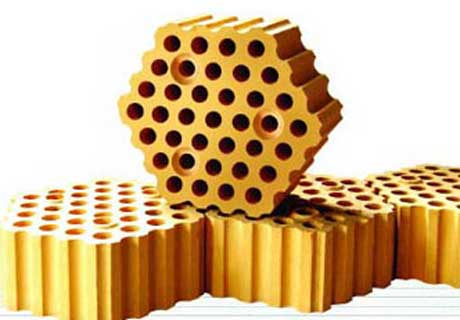
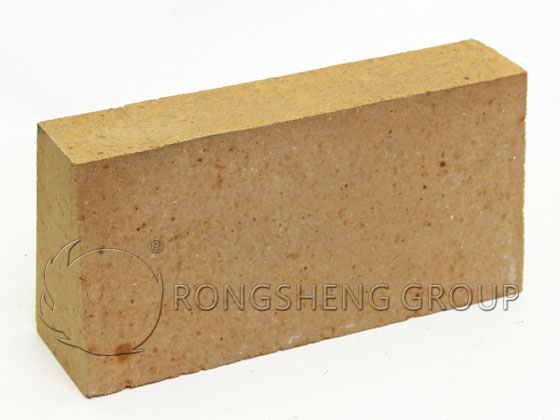
Coke oven structures are built using various types of refractory materials. Among these, silica bricks are the preferred choice for the combustion chambers of coke ovens due to their cost-effectiveness and excellent high-temperature performance—most notably their superior creep resistance. However, silica bricks possess a relatively high coefficient of thermal expansion. During the heating process, the oven walls expand; under prolonged exposure to high temperatures, this expansion-induced stress causes deformation in the complex structure of the coke oven walls. Furthermore, because of phase transformations that occur at lower temperatures, silica bricks exhibit poor thermal stability below 800°C. Thermal shock—triggered by temperature fluctuations from the repeated opening and closing of oven doors, coal charging, and coke discharging—inevitably damages the carbonization chamber walls, particularly near the oven heads. The silica brick walls at the oven heads are especially prone to spalling and cracking due to exposure to cooler external air currents. These factors lead to the fragmentation of the silica bricks and the loosening or deformation of the wall surfaces; this, in turn, increases resistance during the coke-pushing process, further exacerbating damage to the oven walls. As a coke oven ages during its operational lifespan, the extent of this damage progressively increases.
Repair Methods for Various Degrees of Coke Oven Damage
After a certain period of service, coke ovens may sustain varying degrees of damage. The corresponding repair methods are as follows:
| Coke oven service life | Developments in Corresponding Repair Methods and Refractory Materials |
| 31–40 years | Major overhaul using silica bricks/zero-expansion silica bricks; hoisting and installation of large-scale silica-based modules. |
| 21-30 years | Roof-removal repairs using silica bricks or zero-expansion silica bricks; hoisting and installation of large-scale modules. |
| 11-20 years | Local patching/replacement using silica bricks; hot repair using zero-expansion silica bricks. |
| 5-10 years | Hot gunning (thermal spraying) and ceramic welding. |
| Following these repairs, the service life of a coke oven can be extended to over 50 years. | |
Ceramic Welding Repair
This process utilizes silica brick particles—identical in composition and phase to the existing structure—which are fused and sintered into the silica brick wall through high-temperature reactions facilitated by a combustion aid.
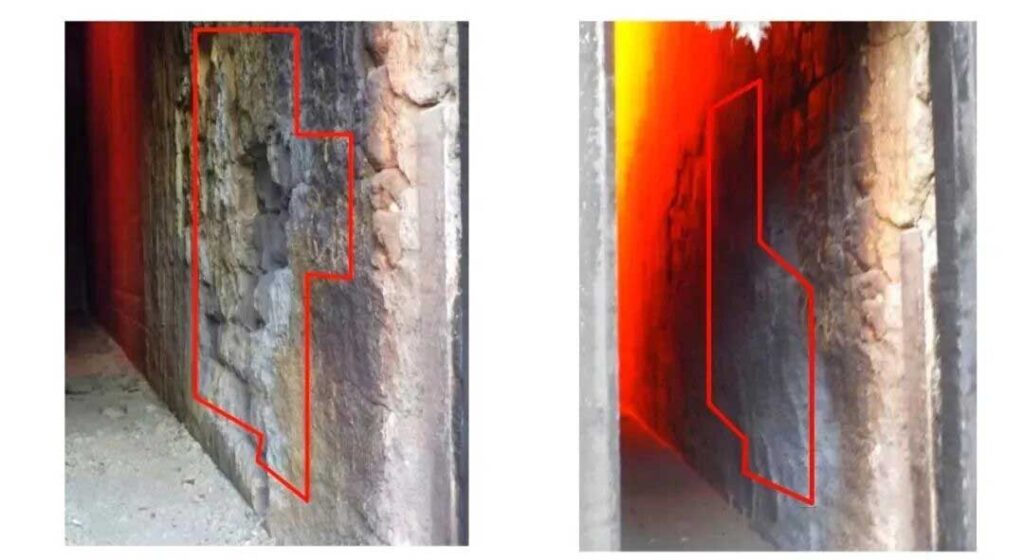
Following the ceramic welding repair, localized, minor damage to the furnace walls is restored, allowing the coke oven to resume operation immediately. Prior to the repair, thorough preparation is required to ensure that any graphite adhering to the furnace wall surfaces is completely burned off; failure to do so may lead to the repair material peeling away shortly after application. The repair work must strictly adhere to established operational protocols, with close monitoring of the furnace wall temperature. Improper execution—specifically, allowing the furnace walls to cool for an extended period—can exacerbate existing damage to the silica brick structure, proving counterproductive.
While there is currently no national standard for ceramic welding repair materials, they should meet the following requirements:
- Compositional and phase consistency: The silica brick aggregate must be of the same material as the existing structure, ensuring an identical coefficient of thermal expansion to prevent peeling during heating and operation.
- Low-temperature ignition capability: The repair material must be capable of rapid ignition at temperatures as low as approximately 600°C to avoid ignition failure, which could compromise the quality of the repair.
- Controlled rebound rate: The rebound rate of the repair material should not exceed 48%. While some rebound loss is expected due to the inherent weight of the dry material, excessive rebound negatively impacts operational efficiency.
- Good adherence and workability: The material must exhibit excellent flow and bonding characteristics during application to ensure complete fusion with the furnace wall surface.
- Pre-application testing: The repair material must undergo simulated testing to verify its suitability before use, ensuring a 100% success rate for the actual repair work.
- Appropriate repair equipment: The selection of suitable equipment is critical. The system should feature controllable injection pressure and integrated safety mechanisms—such as flashback arrestors—to prevent accidents, thereby playing a vital role in ensuring high-quality repairs.
Localized Patching
When coke ovens age and develop holes in their walls—leading to fire leakage—localized patching becomes necessary. For small areas, “hot-patching” compounds can be applied on-site; for larger areas, zero-expansion silica bricks are used for repairs.
Roof-Removal Repairs
In cases where a coke oven is severely damaged—often due to significant wall deformation—it becomes necessary to cool down the affected carbonization chambers to carry out repairs. This process is performed without shutting down the entire coke oven battery; only the damaged carbonization chambers and their adjacent combustion chambers are cooled down for rapid repair.
Traditional silica bricks are prone to cracking when used for such repairs, and they also require a lengthy reheating (drying-out) period afterward. Consequently, the use of zero-expansion silica bricks for “hot” repairs has become widespread in China, ensuring safe and reliable long-term operation. These bricks offer high-temperature performance comparable to standard silica bricks, but with a near-zero coefficient of thermal expansion and excellent thermal stability. Once repairs are complete, the oven can be brought back up to operating temperature immediately without any risk of the bricks cracking. At one coking plant, zero-expansion silica bricks have been in use for 15 years and remain in normal operation. Increasingly, these bricks are also being used for “cold” (shutdown) repairs; while the material costs are higher, the significant reduction in repair time allows for a much faster return to service.
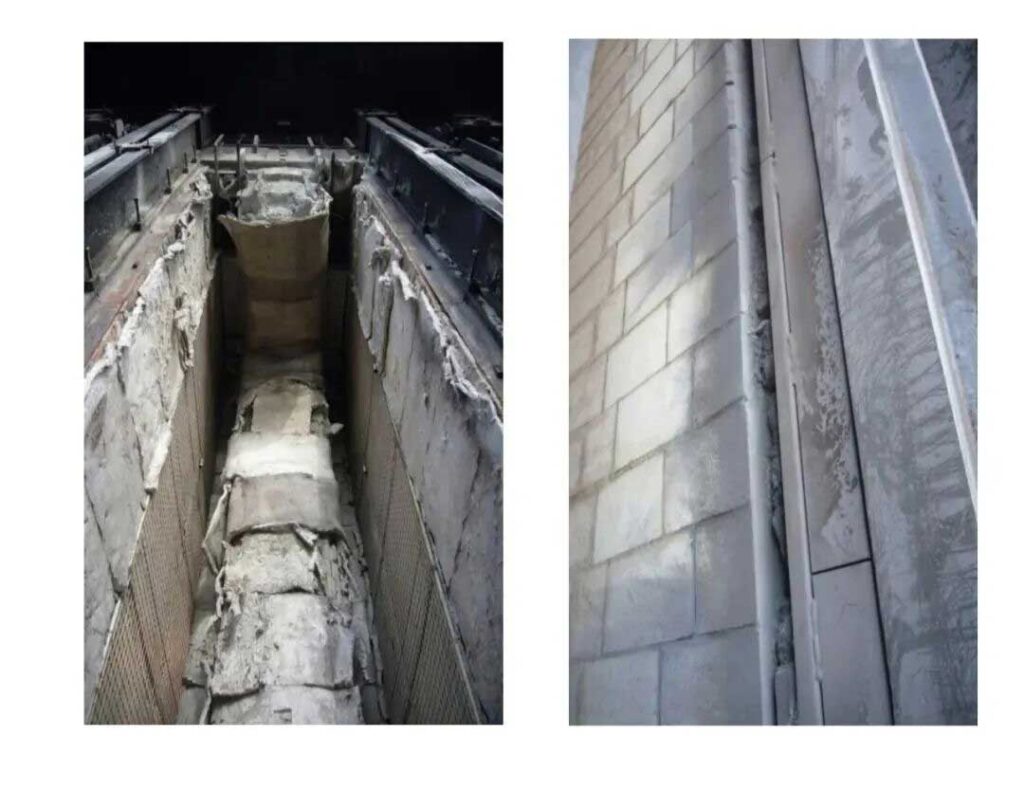
Modular Construction Method
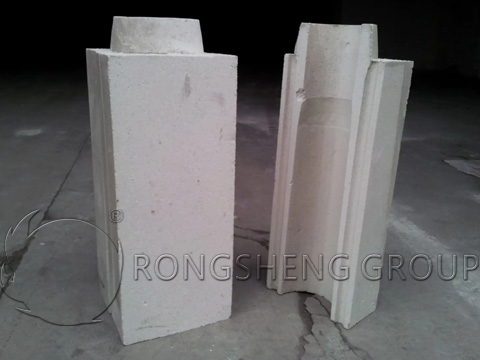
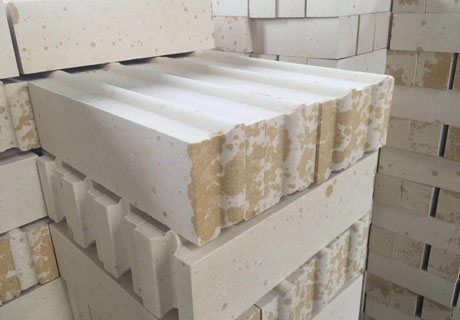
In 2014, a company successfully developed large-scale modular units for the maintenance of coke ovens at a steel plant. These modules—which can encompass up to four heating flues, measure 1.3–2 meters in length and 1.2 meters in height, and weigh over 2 tons—allow for the entire combustion chamber to be installed via hoisting. This innovation significantly reduces both construction costs and timelines, making the masonry work for coke ovens simpler and more manageable. Because these large modules are pre-fired at high temperatures, they are safe and reliable in operation, eliminating the risks typically associated with the oven-drying (commissioning) process.
Advantages of using large-scale modular units for coke oven maintenance:
- Substantial reduction in labor requirements: The process shifts from traditional bricklaying to assembly, thereby minimizing the time personnel must spend working in high-temperature environments. This is particularly beneficial given the long-term, inevitable trend of labor shortages, which also affects the furnace-lining industry.
- Hoisting-based installation of the combustion chamber: This innovation drastically cuts construction costs and time, simplifying the construction of coke ovens.
- High-temperature pre-firing: The modules are fired at high temperatures, ensuring safe and reliable performance without the risk of explosions during the oven-drying phase. It is worth noting that large modules produced without a high-temperature firing process carry a high risk of exploding during drying; due to their complex geometry, such “unfired” modules can crack or explode—even after drying—as residual physical moisture escapes or organic compounds are released. There are documented precedents for such explosions occurring abroad.
- Superior performance: Combustion chambers constructed using these modules exhibit excellent creep resistance. With fewer mortar joints, the risk of gas leakage or cross-flue leakage is minimized, leading to greater energy efficiency and environmental compliance.
- A roadmap for new construction: This modular approach paves the way for the design of new coke ovens based on large-scale modular components.
- Enabling intelligent construction: By transforming traditional bricklaying into an assembly-like process (akin to putting together a puzzle), this method removes significant barriers to the adoption of intelligent, automated construction techniques.
The company’s modular units have been extensively used for “top-opening” maintenance at a steel plant’s coking facility, where they have remained in excellent condition for over 10 years. Furthermore, these large-scale modules have been applied to the installation of coal-charging ports, with a service life exceeding 7 years when used on oven doors.
Several factors can exacerbate damage to a coke oven during maintenance
- Excessive cooling time during oven shutdown for maintenance.
- Inadequate thermal insulation and a lack of temperature monitoring for adjacent oven chambers during the maintenance process.
- The use of substandard materials for repairs. There are documented cases where the use of inferior “zero-expansion” silica bricks led to the formation of accretions (nodules) within the oven, ultimately preventing the pushing of coke.
The quality of silica-based refractory materials is a key determinant of a coke oven’s service life.
- The quality of silica-based refractories is a critical factor in the service life of a coke oven. When selecting silica bricks, it is essential to ensure that the residual quartz content is less than 1% and the tridymite content exceeds 60%. While “zero-expansion” silica bricks offer superior physical and chemical properties compared to conventional silica refractories, their high raw material costs often make them impractical for the construction of new coke ovens.
- Due to their exceptional inherent properties—specifically high load-softening temperatures, low creep, and zero thermal expansion—”zero-expansion” silica bricks are ideally suited for maintenance environments. They enhance repair efficiency and extend the service life of coke ovens. However, it should be noted that “zero-expansion” silica bricks produced from inferior raw materials pose significant risks during the later stages of their service life.
- The ceramic welding repair process integrates materials, equipment, and construction techniques; each of these components is vital to the success of the operation.
- Large-scale modular construction, given its comprehensive advantages, is destined to become the future trend in this field.