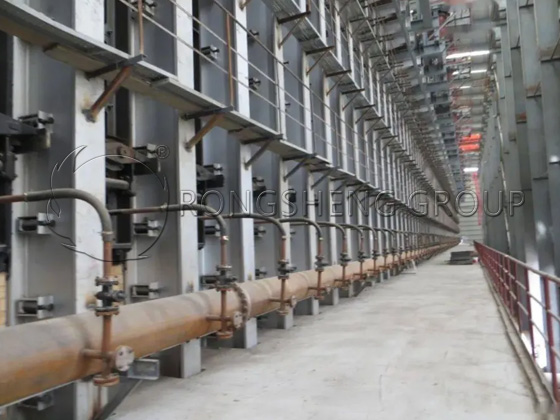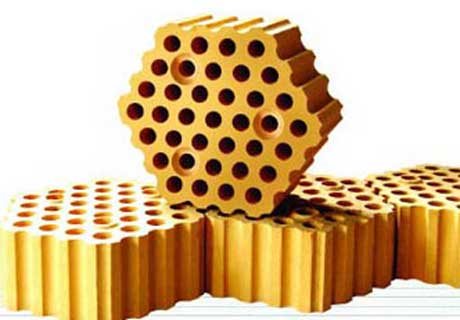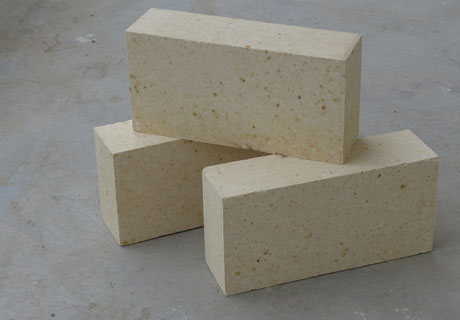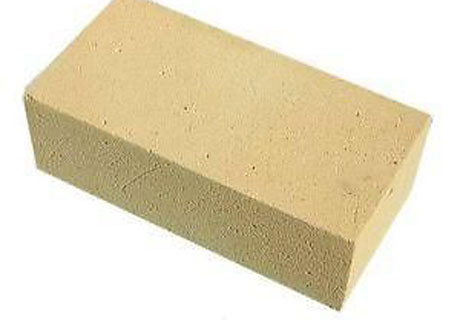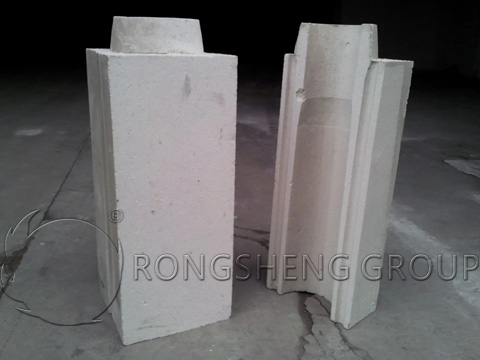
Coke ovens are the main equipment in coke production. Silica bricks are the primary refractory material used in their construction, accounting for approximately 70% of all refractory materials. Currently, silica bricks are the most suitable refractory material for the carbonization chamber walls of coke ovens.
Energy Saving Measures for Coke Ovens
Modern coke ovens employ two energy-saving measures:
- (1) Reducing the thickness of the carbonization chamber walls. Since the carbonization chamber walls are relatively weak and also have a heat storage function, this method is generally not used.
- (2) Increasing the thermal conductivity of the silica bricks used for the carbonization chamber walls.
The heat from the coke oven combustion chamber is conducted to the carbonization chamber through the silica brick walls. Under the same coal contact area, time, and constant combustion chamber temperature, high thermal conductivity silica bricks transfer more heat than ordinary silica bricks. Therefore, while maintaining a constant temperature within the carbonization chamber, the flame temperature in the combustion chamber constructed with high thermal conductivity silica bricks can be lower. This inevitably reduces the required fuel consumption, thus saving energy. At the same time, NOx emissions into the atmosphere will inevitably decrease. Therefore, high thermal conductivity silica bricks play a role in both energy conservation and environmental protection.
Main Characteristics of Ultra-Dense Silica Bricks
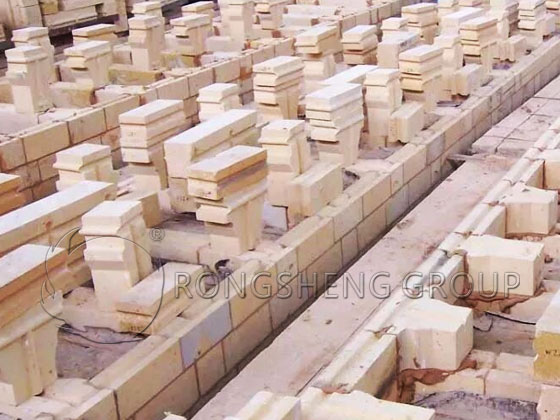
- High Density: Ultra-dense silica bricks have a bulk density ≥1.90 g/m³, while dense silica bricks have a bulk density ≥1.85 g/m³.
- Good Thermal Conductivity: At 800~1200℃, the thermal conductivity of ultra-dense silica bricks increases by 20%, while that of dense silica bricks increases by 15%.
- High Strength and Good Wear Resistance: The strength of both ultra-dense and dense silica bricks is significantly higher than that of ordinary silica bricks, and their wear resistance is also improved. The wear resistance of ultra-dense silica bricks is more than 40% higher than that of dense silica bricks.
- Large Heat Capacity and High Heat Storage: The heat capacity of both ultra-dense and dense silica bricks is increased by more than 2.5%.
High-Density Silica Bricks for Coke Ovens
With the development of the coking industry, the quality requirements for coke oven silica bricks are increasingly stringent, especially for lining the carbonization chamber, which requires silica bricks to possess high density, high thermal conductivity, and good high-temperature compressive strength. Therefore, extensive research has been conducted both domestically and internationally on reducing the true density of silica bricks, improving thermal conductivity, increasing bulk density, and improving the purity of siliceous raw materials. my country has already trial-produced new varieties such as high-density silica bricks, high-purity high-density silica bricks, and high-thermal-conductivity high-density silica bricks.
- High-Density Silica Bricks
Increasing the density of silica bricks is an effective way to improve the quality and service life of coke oven silica bricks and shorten coking time. High-density silica bricks require a finished product porosity of less than 16%, and a true density greater than 2380 kg/m³.
- High-Temperature Thermal Conductivity High-Density Silica Bricks
High-thermal-conductivity high-density silica bricks are refractory materials made by adding high-thermal-conductivity, high-density additives, such as CuO, Cu₂O, and TiO₂, to their raw materials. Using high-thermal-conductivity, high-density silica bricks to line coke ovens can effectively shorten coking time and increase coke oven output. The manufacture of high-thermal-conductivity, high-density silica bricks is widely valued both domestically and internationally.
High Thermal Conductivity Silica Bricks for Coke Oven Repair
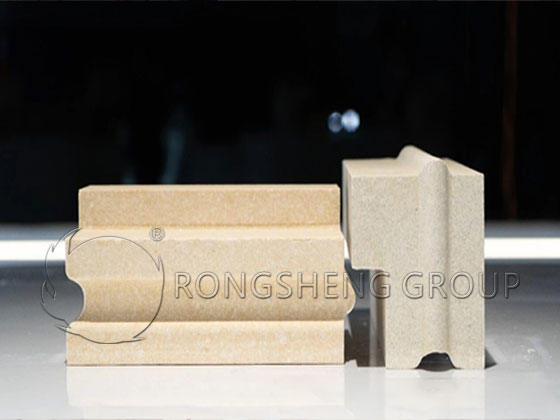
High thermal conductivity silica bricks are a new energy-saving and environmentally friendly material for large coke ovens used in hot coke oven repair. Based on existing silica brick production technology and without altering the chemical composition of existing silica bricks, the internal structure of the bricks is optimized to increase density, and the quartz content is increased through reasonable thermal regimes and mineralizers.
Due to the optimized internal structure and increased quartz content, their thermal conductivity is more than 20% higher than that of ordinary silica bricks.
The increased thermal conductivity of high thermal conductivity silica bricks effectively reduces energy consumption in coke ovens and carbon furnaces, resulting in significant economic and social benefits.
Currently, high thermal conductivity silica bricks have been put into use in four coke ovens of a steel company, achieving the expected energy-saving and emission-reduction targets.
Comparison of performance indicators between high thermal conductivity silica bricks and ordinary silica bricks
| Items | High thermal conductivity silica bricks | Ordinary coke oven silica bricks | Ordinary carbon furnace silica bricks | ||
| Furnace bottom and wall | other | ||||
| Apparent porosity, % | ≤ | 20 | 22 | 24 | 24 |
| True density, g/cm3 | ≤ | 2.33 | 2.33 | 2.34 | 2.34 |
| room temperature pressure resistance, MPa | ≥ | 40 | 40 | 35 | 35 |
| Load softening start temperature[0.2MPa×0.6%]℃ | ≥ | 1650 | 1650 | 1650 | |
| thermal conductivity w/(m·k),1100℃ | ≥ | 2.30 | 1.9 | 1.9- | |
| thermal expansion coefficient 1000℃,% | ≤ | 1.25 | 1.28 | 1.30 | 1.30 |
| Heating permanent line change (1450℃×2h),% | 0-0.2 | 0-0.2 | – | ||
| Residual Quartz,% | ≤ | 1.0 | 1.0 | – | |
| ω(SiO2),% | ≥ | 94.5 | 94.5 | 94.5 | |
| ω(Al2O3),% | ≤ | 1.5 | 1.5 | 1.5 | |
| ω(Fe2O3),% | ≤ | 1.5 | 1.5 | 1.5 | |
| ω(CaO),% | ≤ | 2.5 | 2.5 | 2.5 | |
High Thermal Conductivity Silica Bricks Receive High Praise
Currently, calcining furnaces on the market suffer from low capacity and short lifespan due to variations in refractory material and raw coal quality, severely impacting the industry’s economic efficiency. To address this issue, high thermal conductivity, wear resistance, and corrosion resistance silica bricks have been developed and have been extremely well-received by companies since their market launch.
This product is made from a mixture of high-purity, dense, and highly reactive high-quality silica. It incorporates ultra-high thermal conductivity nanomaterial additives and is produced using 600t high-pressure molding, increased sintering temperature, and extended holding time.
The product boasts a SiO2 content of over 96%, a thermal conductivity exceeding 2.6 W/m·K, a room-temperature compressive strength exceeding 50 MPa, an apparent porosity of less than 19%, a bulk density greater than 1.85 g/cm³, and a tricrite content exceeding 70%. It possesses numerous advantages, including high purity, density, corrosion resistance, excellent thermal conductivity, and wear resistance. This significantly increases production capacity and extends kiln life. Reducing emissions of pollutants such as NOx has considerable economic and social benefits and represents a new direction for the future development of silica bricks.