In steel production, refractory materials directly affect equipment lifespan and production safety. Different smelting equipment has significantly different requirements for refractory material performance. What are the requirements for refractory materials in the steel smelting process?
In the steel smelting process, refractory materials should meet the following requirements:
- ① Possess a wide operating temperature range, generally up to 1760℃.
- ② Be able to withstand rapid temperature changes, have good thermal shock resistance, and prevent cracking and fracture of the furnace lining refractory material.
- ③ Be able to withstand relatively high compressive stress under high and low temperature conditions.
- ④ Be able to withstand frictional forces under high and low temperature conditions.
- ⑤ Be resistant to slag (including acidic and basic slags).
- ⑥ Be able to withstand the enormous hydraulic pressure and buoyancy of molten metal.
- ⑦ Be able to withstand the effects of furnace gases, including CO, SO₂, CO₂, CH₄, H₂O, as well as volatile oxides and salts in the metal, preventing them from penetrating into the refractory material and reacting with it.
Because refractory materials must withstand the conditions mentioned above, they usually serve as a highly efficient insulating layer, and sometimes they also need to act as a heat conductor or absorber, depending on the application.
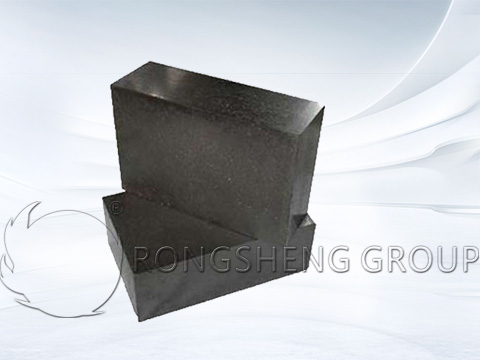
Technical Requirements for Refractory Materials in Steelmaking Systems
The steelmaking system comprises four key components: converter, electric arc furnace, taphole, and induction furnace. The selection criteria for refractory materials for these components are as follows:
Refractory Materials for Converter Steelmaking
The converter furnace temperature exceeds 1600℃ and is subjected to molten steel erosion and slag corrosion. Therefore, the materials must meet the following conditions:
- Magnesia-carbon bricks: The mainstream furnace lining material. Made of magnesia (MgO≥90%) and graphite (content 10%-20%), it possesses both resistance to alkaline slag corrosion and thermal conductivity. In practical applications, adjusting the graphite ratio can balance corrosion resistance and oxidation resistance, extending the furnace lining life to over 5000 heats.
- Maintenance technology. Localized wear areas (such as slag lines and trunnions) require repair using patching materials. Water-based patching materials, due to their rapid sintering characteristics, can shorten repair time to less than 30 minutes. Slag splashing protection technology forms a protective layer through slag spraying, reducing refractory material consumption.
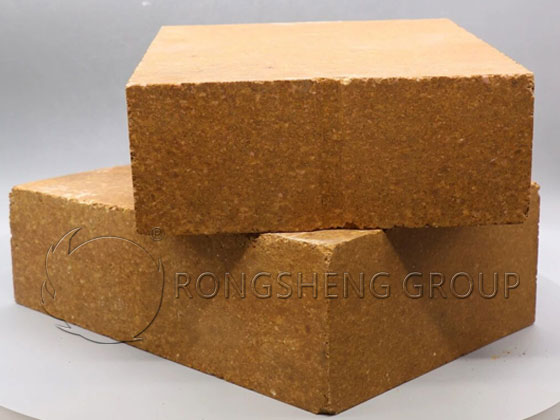
Refractory Materials for Electric Arc Furnaces
The furnace roof and walls of electric arc furnaces must withstand arc radiation (temperature fluctuations exceeding 1500℃) and molten slag erosion.
- Roof Materials. Magnesia-alumina spinel bricks (MgO-Al₂O₃) have a low coefficient of thermal expansion and better thermal shock resistance than ordinary magnesia bricks, making them suitable for areas with rapid temperature changes. Precast components are used in the high-loss electrode triangle area, offering convenient installation and a service life of up to 200 heats.
- Furnace Wall Materials. Magnesia-carbon bricks (MgO-C) are the mainstream choice, with graphite content controlled at 12%-18% to balance oxidation resistance and erosion resistance. Local repairs use spray coatings (magnesia sand + resin binder), allowing for uninterrupted furnace operation.
Refractory Materials for Tapping Outlets
The tapping outlet needs to withstand high-speed scouring by molten steel (flow velocity up to 5-8 m/s). Technical requirements include:
- Magnesia-carbon tapping outlet bricks. High-density design (≥2.95 g/cm³) reduces molten steel penetration, and combined with antioxidants (such as aluminum powder) extends service life to 150 heats.
- Sliding nozzle system. Both the sliding nozzle bricks and the top nozzle are made of magnesia-carbon material. A hydraulic mechanism precisely controls the steel flow rate, with an error controllable within ±2 tons/heat.
Refractory Materials for Induction Furnaces
Refractory materials for induction furnaces need to adapt to the high-frequency electromagnetic field environment and are mainly divided into two categories:
- Neutral furnace lining. Quartz sand (SiO₂≥99%) briquetted furnace linings are suitable for cast iron with a melting temperature ≤1600℃, offering low cost but a lifespan of only 50-80 heats. Corundum castables (Al₂O₃≥90%) are used in stainless steel smelting, withstanding temperatures above 1800℃ and a lifespan of up to 200 heats.
- Basic Furnace Linings. Magnesia sand materials (MgO≥95%) are used in the smelting of high-manganese steel and nickel-based alloys, resisting alkaline slag corrosion, but requiring strict control of the sintering process to avoid cracking.
The selection of refractory materials for each stage of the steelmaking system must comprehensively consider actual operating conditions such as temperature, corrosive media, and mechanical stress. From converter magnesia-carbon bricks to induction furnace corundum castables, advancements in materials technology have consistently focused on extending lifespan and reducing maintenance costs. Mastering these key technical points provides a fundamental guarantee for the efficient and stable operation of steel production.
What are the characteristics of the bricks used at the taphole and bottom of the converter?
The taphole is severely damaged due to the erosion caused by high-temperature molten steel and rapid temperature changes. Therefore, it should be lined with integral magnesia-carbon bricks or composite magnesia-carbon bricks with high erosion resistance and oxidation resistance. Integral magnesia-carbon bricks or composite bricks (such as MT14A) are generally used, and they need to be replaced after 200 heats.
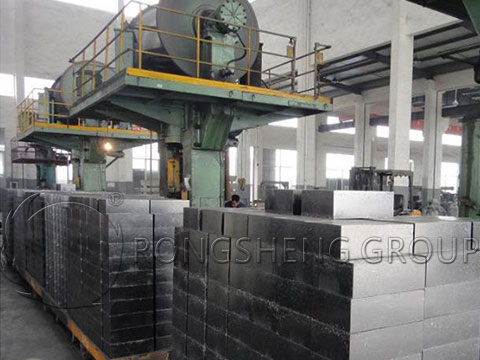
Bottom gas supply bricks are used to supply Ar, N₂, or CO₂, or a mixture of these three with oxygen, from the bottom of the converter. During reblowing, high temperatures and strong stirring are generated; therefore, the bottom gas supply bricks must have high temperature resistance, erosion resistance, scour resistance, wear resistance, and strong spalling resistance. From a blowing perspective, the bubbles generated by the gas passing through the gas supply bricks should be small and uniform. The gas supply bricks are safe and reliable in use, and their service life should be synchronized with the furnace lining life as much as possible. For this reason, magnesia-carbon bricks remain the best material.
How to conduct comprehensive lining construction for a converter?
The working layer of the converter is in direct contact with high-temperature molten steel and slag, subjected to chemical erosion from the slag, scouring from the molten steel, slag, and furnace gases, and mechanical impact from the addition of scrap steel, resulting in a very harsh working environment. During the blowing process, the lining’s corrosion and damage vary depending on the working conditions of different parts. To address this, depending on the degree of damage to the bricks, different materials or different grades of the same material of refractory bricks are used; this is the so-called comprehensive lining construction.
- (1) At the furnace mouth, magnesia-carbon bricks with high thermal shock resistance and slag resistance, resistance to slag and high-temperature exhaust gas scouring, and resistance to steel adhesion, and even if steel adheres, are easy to clean, and are used.
- (2) At the furnace cap, this area is most severely affected by slag erosion and is also affected by rapid temperature changes and dusty exhaust gas scouring; therefore, magnesia-carbon bricks with strong slag resistance and good thermal shock resistance are used.
- (3) The charging side of the furnace lining should be constructed with magnesia-carbon bricks that possess high slag resistance, high strength, and high thermal shock resistance, and are fortified with antioxidants.
- (4) The tapping side of the furnace lining is less affected by thermal shock, but is subject to greater thermal shock and erosion from molten steel. Magnesia-carbon bricks of the same grade as those used on the charging side are commonly used, but can be slightly thinner.
- (5) The trunnion areas on both sides, apart from being eroded during the blowing process, have no slag cover on their surface. The carbon in the bricks is easily oxidized, so magnesia-carbon bricks with strong oxidation resistance should be used.
- (6) The slag line area, which is subject to severe slag erosion, requires magnesia-carbon bricks with good slag resistance; MT14A magnesia-carbon bricks can also be used.
- (7) The molten pool and furnace bottom areas are subject to erosion from molten steel, but the damage is less severe compared to other areas; MT14B magnesia-carbon bricks with lower carbon content can be used.